Vintage Sterling Silver Is Trending—Here’s Your Guide to Buying and Collecting It
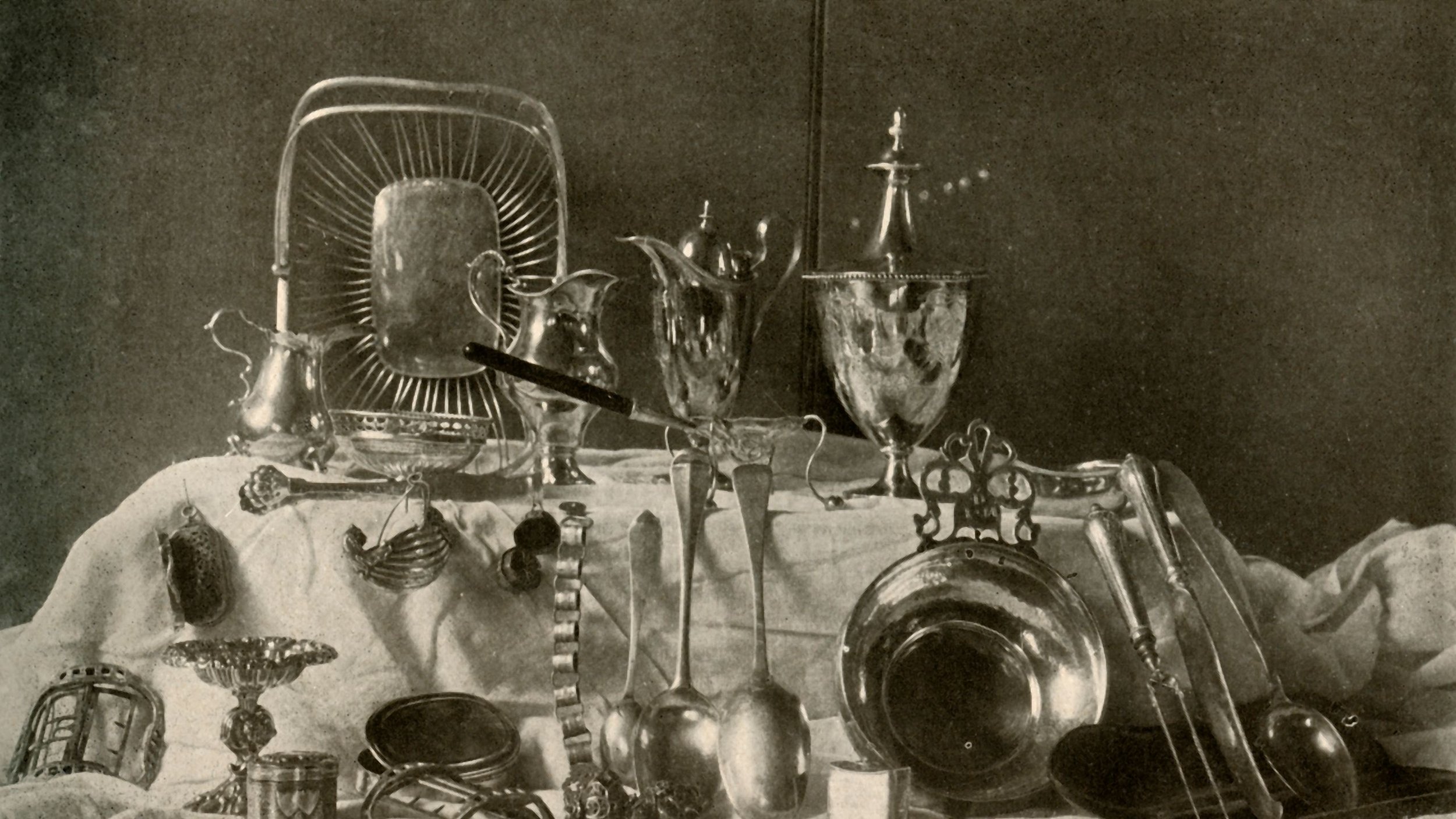
“The first sterling silver objects I fell in love with were modernist cocktail shakers,” muses John Stuart Gordon, the Benjamin Attmore Hewitt Curator of American Decorative Arts at Yale University Art Gallery. “They were a whole microcosm in one object type, referencing Jazz Age aesthetics, skyscraper architecture, new materials, the politics of Prohibition, and early-20th-century gender roles.”
For many like Gordon, it’s the stories and history that silver contains that makes it such an alluring material to collect. And as Vogue reported at the end of 2025, silver is finding its way into the hearts of a new generation. Eager to join them? Here’s what you need to know about sourcing, buying, and using silver.
Read More
How to Renovate a Midcentury Bathroom (Without Sacrificing Its Soul)
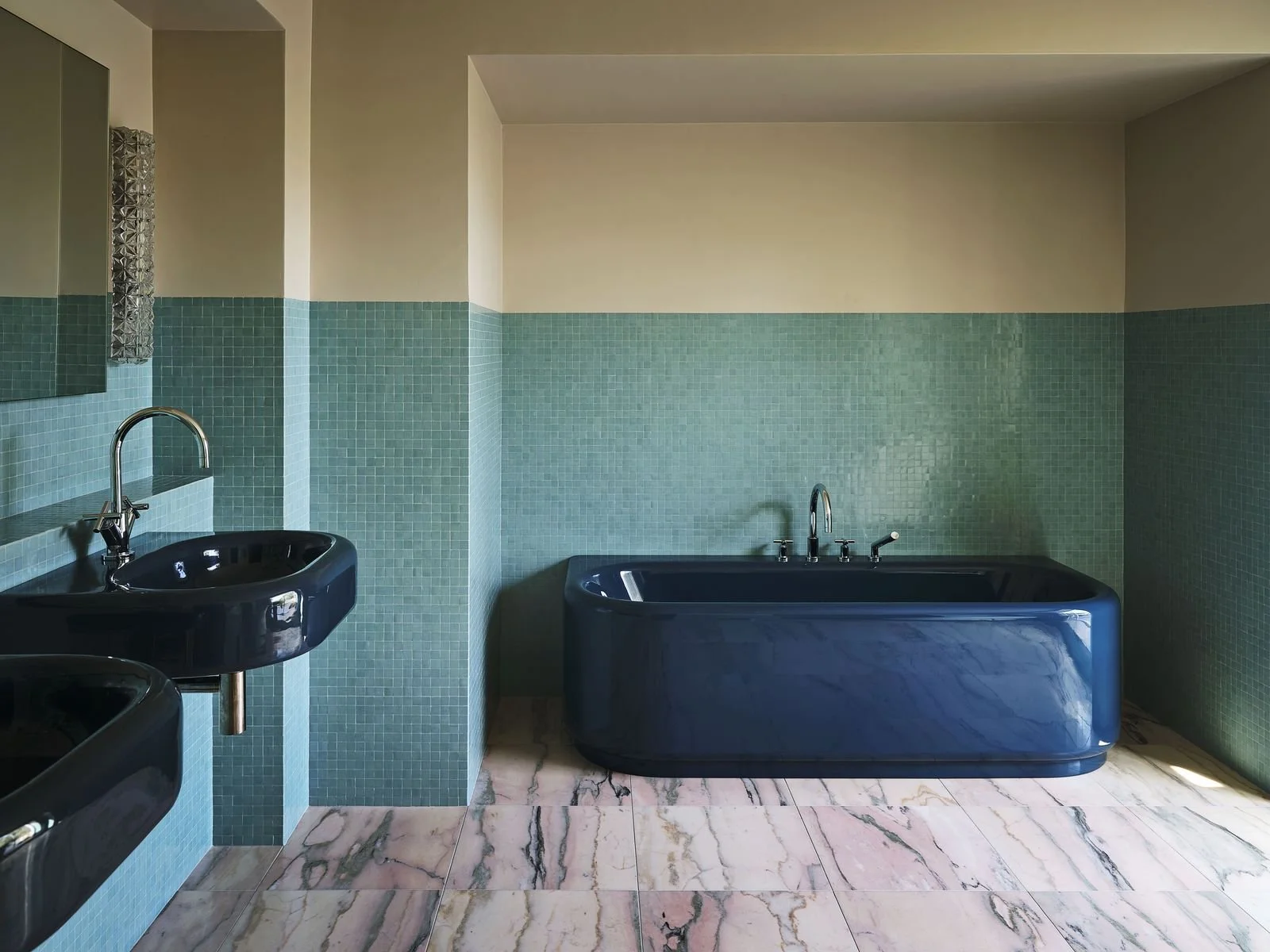
A midcentury bathroom presents a particular renovation dilemma. Gut it and you erase the period character that gives the whole house meaning, but leave it as is and you often end up with something too small, too worn, or too inflexible for contemporary life. The question designers are asking is: How do you honor the soul of a postwar bathroom while making it livable for today?
Read More
Trailblazing Architect Paul R. Williams's Home in LA’s Lafayette Square Gets a New Lease on Life
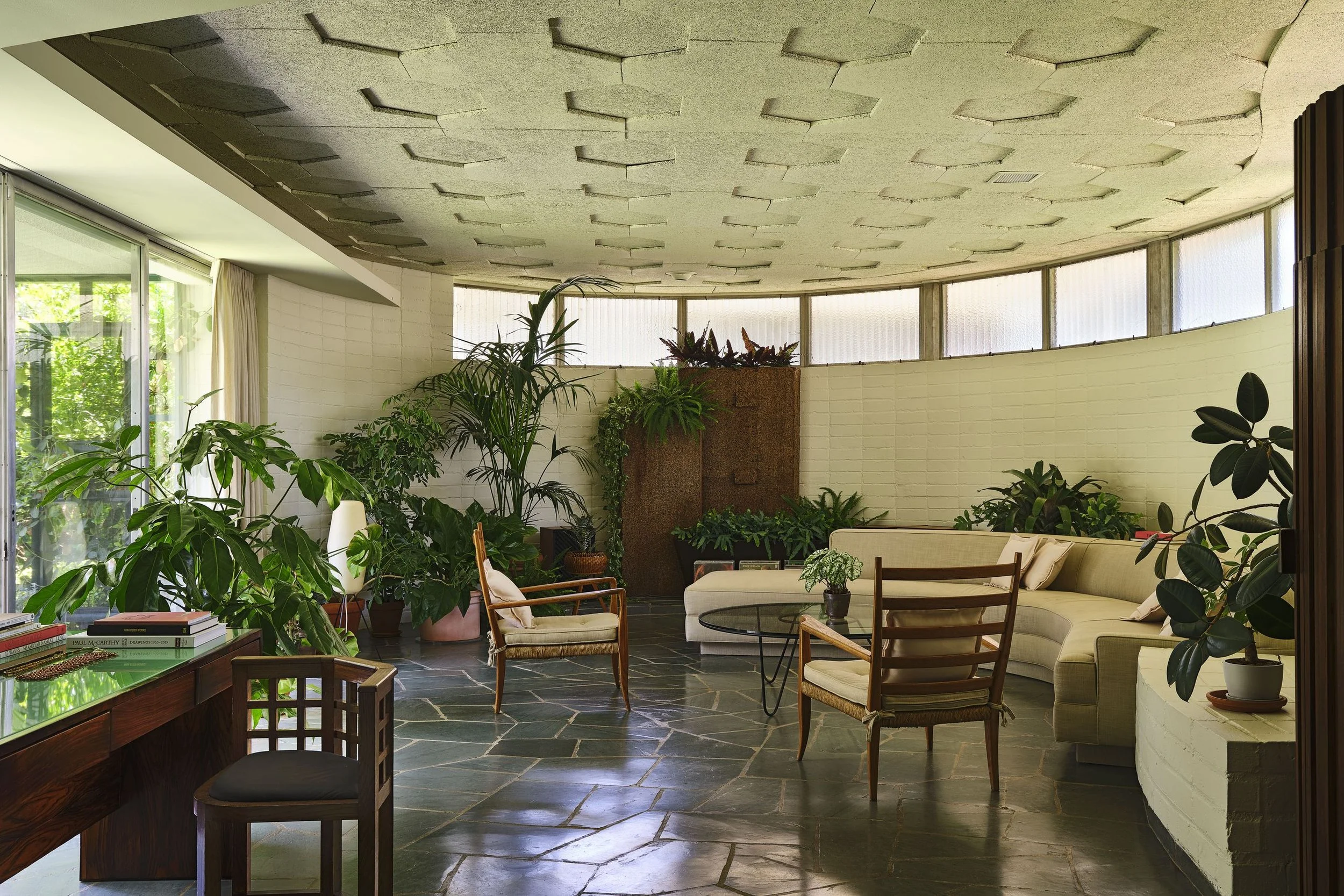
In 1952, Paul R. Williams—the first African American architect licensed west of the Mississippi River—built a beautifully proportioned International Style home in the Los Angeles neighborhood of Lafayette Square for a client who would not have been legally permitted to live there just four years earlier: himself. Designed for him and his wife after their children were grown, Williams lived there until his death in 1980, and it remained in the family until 2018. That’s when its present owner, a woman whose career in the arts often affords her the chance to work with artists’ estates, recognized this place as a “primary text” and heeded an “impulse to protect and shepherd” this important piece of Williams’s legacy.
Read More
See Frank Lloyd Wright’s Final Design, Revealed for the Very First Time
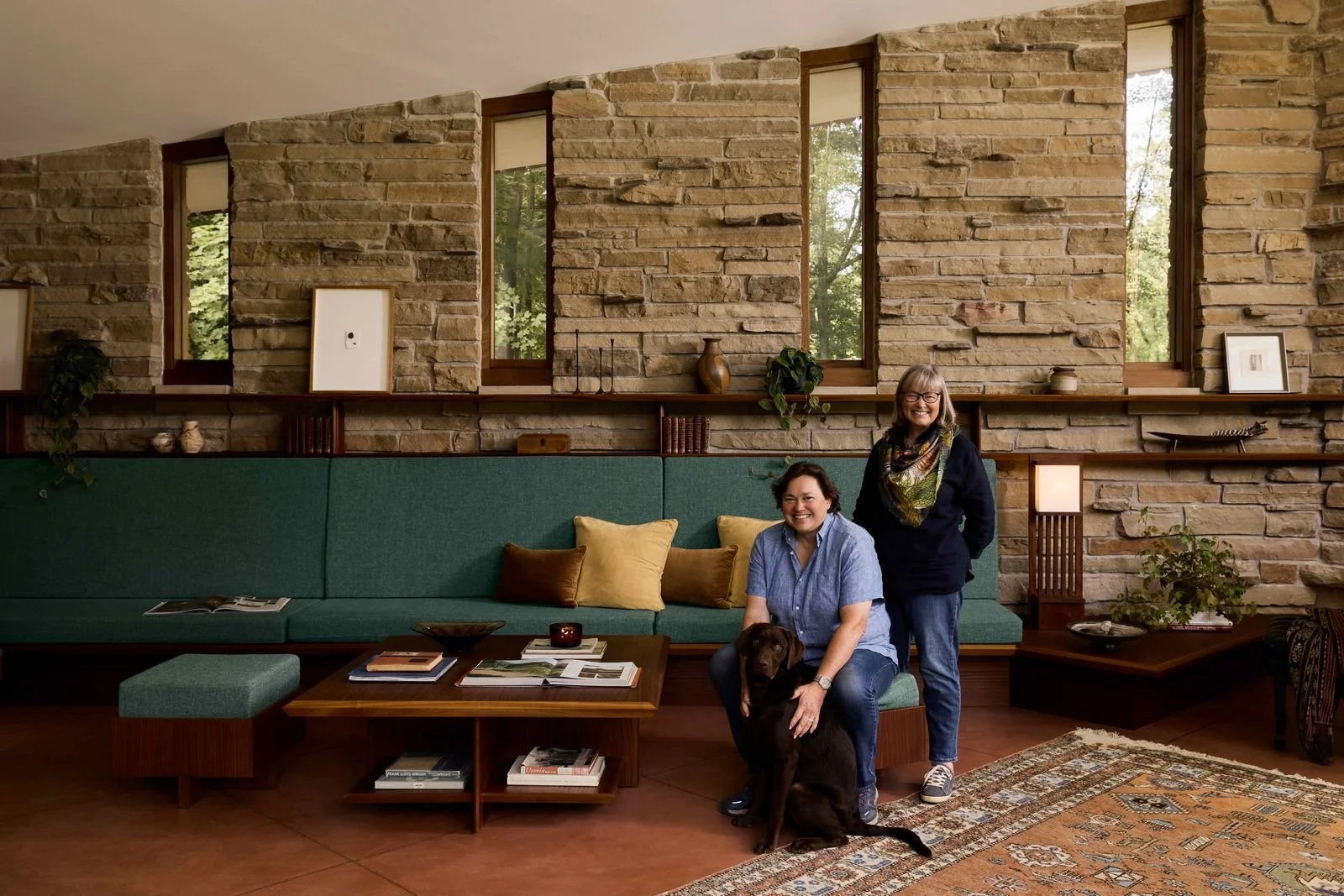
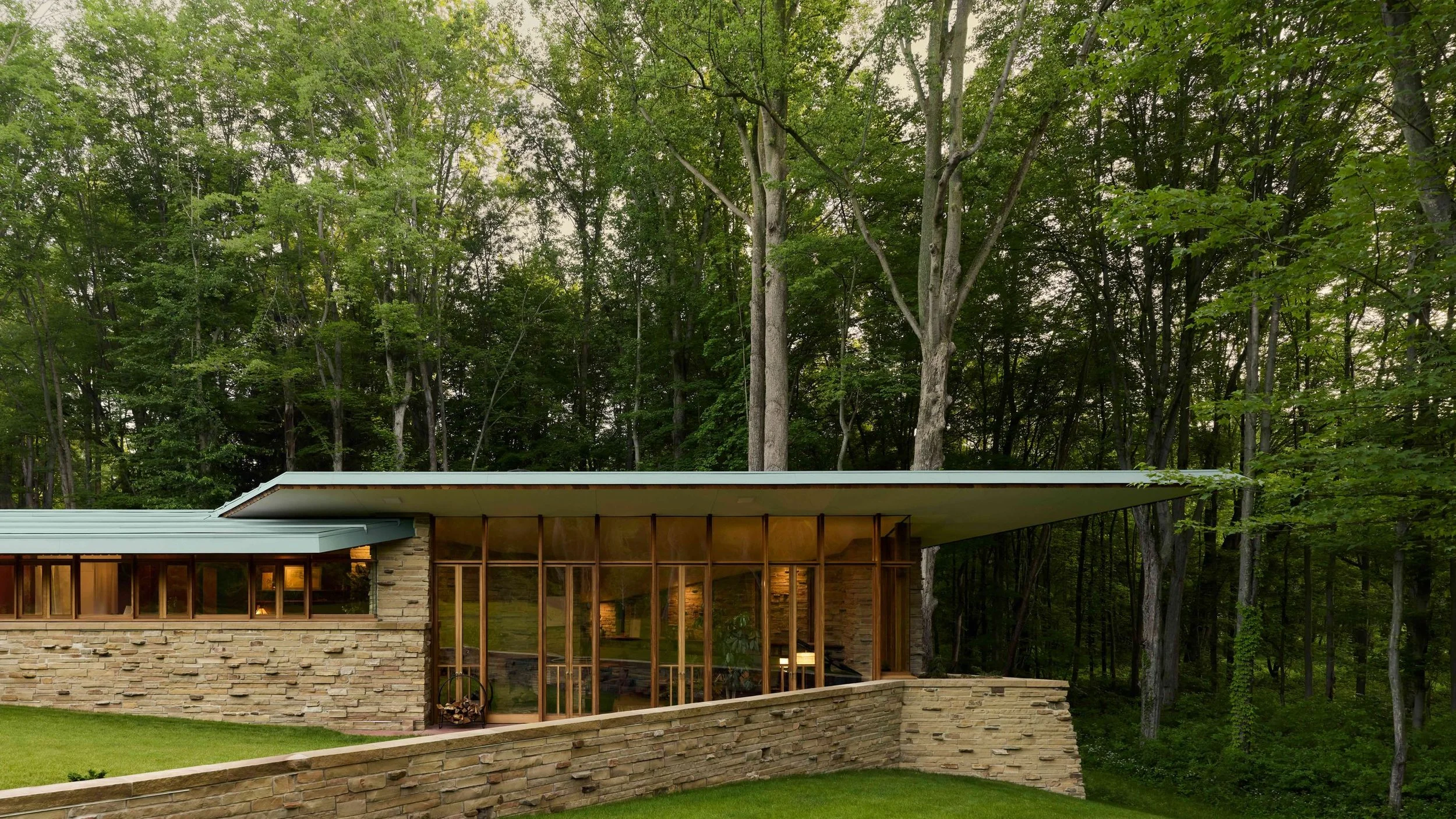
Over the course of four episodes, viewers of The Last Wright have watched Frank Lloyd Wright’s last design come to life, as mother-daughter team Debbie and Sarah Dykstra built a home based on a long-lost set of plans by the legendary architect. Tonight at 8 p.m. ET on Magnolia Network, fans will get to see the completed house revealed. Wright’s design for a Usonian house he called Project #5909 had been on his drawing board when he died in 1959. The dwelling was meant for his client Louis Penfield, who already had one home designed by Wright (built in 1953) on his property in Willoughby Hills, Ohio.
Read More
Frank Lloyd Wright’s Final Design Was Finished 66 Years After His Death—And You Can Watch Its Construction
Mother-daughter team Debbie and Sarah Dykstra set themselves a challenge most people wouldn’t take on: building a home using the plans from a 1959 design by Frank Lloyd Wright. Starting September 3, you can watch the whole process on The Last Wright: Building the Final Home Design of America’s Greatest Architect, which premieres on the Magnolia Network and will stream on HBO Max the following day. Executive-produced by Chip and Joanna Gaines, this four-part series follows the complex construction of RiverRock House, which is based on the last architectural plans—a Usonian house known as Project #5909—that Wright drafted before his death in 1959.
Read More
Step Inside Castle Howard, a British Icon in the Midst of a Major Restoration
If you recognize the great domed silhouette of Castle Howard in North Yorkshire, England, it might be because you remember either the 1981 television production or the 2008 film version of Brideshead Revisited, based on Evelyn Waugh’s classic novel of class, aristocratic English Catholics, and World War II. In both adaptations, Castle Howard stood in for the stately house at the center of the drama. But the Baroque palace’s own story is even more captivating than any fictional account, as Remy Renzullo, the young American interior designer currently working on the still-private residence’s update, can attest.
Read More
Palm Springs Modernism Week 2025: AD PRO’s Essential Guide to the Midcentury Festival
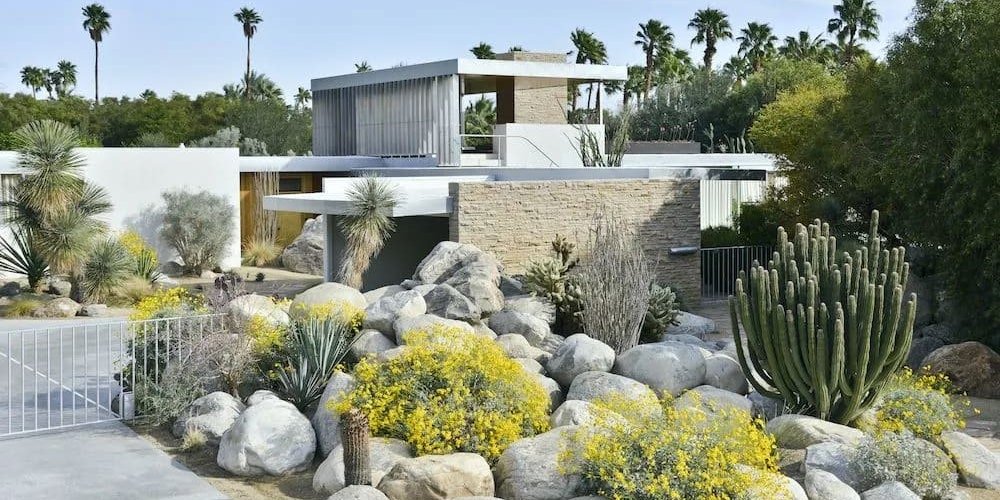
Palm Springs is a multicolored marvel in the desert, and visiting—especially during Palm Springs Modernism Week—can feel like stepping out of a time machine and into a Doris Day movie. Perched at the edge of California’s Coachella Valley, a dry, rocky landscape gives the surroundings of this city of about 45,000 people a muted color palette, but the vivid hues of midcentury-modern architecture (think canary yellow front doors, crisp white breeze blocks, and the occasional pink flamingo) give it the feel of a Slim Aarons photograph come to life.
Read More
5 Interior Design Trends That Will Define 2025
Gaze into an antique mirror—you know you want to—and imagine what the interior design trends for 2025 might be. What do you see? If you’ve followed AD PRO’s reporting on color trends, or checked in on the wellness amenities, AD100-approved retro designs, or in-demand layouts covered in AD PRO’s member-exclusive 2025 Interior Design Forecast, you probably have some idea. (Hint: Tactile and natural materials like terra-cotta and rattan aren’t going anywhere.),
Read More
Why Skirted Furniture Endures
There are certain decorating tropes—wall-to-wall carpet, mirror walls, conversation pits, chintz fabric—that remain consistent in their ability to elicit strong feelings but tend to wax and wane in genuine popularity. They follow larger trends, and their fortunes rise and fall at the mercy of the marketplace. What seems charming and idiosyncratic one moment (cottagecore, anyone?) seems dated and overly fussy the next. One trend that illustrates this perfectly is the curiously retro practice of skirting furniture, which has been having a moment for a few years now and accumulating on mood boards and showroom floors.
Read More
4 Ceiling Trends That Give New Weight to the “Fifth Wall”
Ceilings can, and should, dazzle. A stellar example can signal thoughtfulness about the design of a whole space, and function as a kind of decorating Easter egg: Look up, and you might be rewarded with gestures of wit, virtuosic craft, optical tricks, or sumptuous color. So what ceiling trends are raising the roof right now? We spoke with inventive designers with distinctly different aesthetic points of view to find out what inspires them when it comes to designing a room’s fifth wall.
Read More
The Case for the All-Red Room
In the mid 1930s, legendary Vogue editor in chief Diana Vreeland began writing a column for Harper’s Bazaar called Why Don’t You? in which she would encourage readers to try something new, almost as an absurdly glamorous dare. Among her suggestions was the idea that readers might decorate their homes entirely in green, with a verdant mix of houseplants and glazed porcelain. But Vreeland’s personal favorite color was red, specifically “the color of a child’s cap in any Renaissance portrait.”
Read More
5 Kitchen Trends Taking Over Homes Now
Kitchen technology is evolving apace, with AI and other innovations pushing products ever closer to Jetsons territory. But some of the hottest kitchen trends right now have a distinctly vintage feel, from archival tile colors to retro flooring and the return of the breakfast bar. We asked some busy architects and designers what trends they’ve spotted so far in 2024.
Read More
Doomsday Design: The Reality of Disaster Preparedness in America
What’s the first thing you would do if you learned that a cataclysmic disaster was about to unfold? If there was no cell service and you couldn’t reach your loved ones, you might reach for a go-bag, a portable generator, or a liferaft. If you frequently think about disaster preparedness and doomsday design (it’s difficult not to these days), you might conceive of your home either as a potential emergency shelter, or as a place from which you might have to evacuate one day. Since the advent of the nuclear age, we’ve become accustomed to thinking of “the end of the world” in a terrifyingly literal way, less as one of several surmountable calamities, and more like a hard stop on civilization itself: doomsday.
Read More
Palm Royale Is the Most Stylish Show on TV Right Now
Given the verbal prompt “Palm Beach in the late 1960s,” your mind’s eye would undoubtedly conjure something fabulous. But this imaginary Florida aerie wouldn’t conform to one specific style, like Art Deco or Hollywood Regency; it would probably be a layered mix of Spanish-style architecture with chinoiserie furniture in a Lilly Pulitzer color palette. Palm Beach style evolved from a unique mix of 20th-century architectural movements, which combined in a way that tells the story of its clientele and shifting tastes. So for production designer Jon Carlos and set decorator Ellen Reede, bringing the tropical technicolor world of the new Apple TV+ series Palm Royale to life was a challenge full of historical rabbit holes and creative complexity.
Read More
Is It Time to Do Away With “Good Taste”?
In 1913, the designer Elsie de Wolfe published a book that would become a classic of interior design, a profession she helped create during her long career. Entitled The House in Good Taste, its mission could not have been more clear: De Wolfe wished to see American interiors brightened up, styled with a confident point of view, and cleared of the Victorian clutter that crowded so many 19th-century homes with fringe, cut velvet, seashells, and elaborate wood carving.
Read More
The Enduring Appeal of “Ugly” Design
There is something irresistible about the ugly duckling, even before its grand metamorphosis into (spoiler alert) an adult swan. He’s gangly, his feathers look weird, his proportions are off, and every other animal he encounters on his journey notices this and comments on it. The moral of this beloved fairy tale is that beauty and its antithesis, ugliness, are meaningful only in context. The “ugly” duckling was just the victim of a temporary category error, he wasn’t actually ugly.
Read More
Has Brutalist Architecture Hit the Saturation Point?
Its name doesn’t inspire a sense of coziness, comfort, or even glamour, yet Brutalist architecture—the postwar style that pinned its hopes on the possibilities of poured concrete—seems to be back in the zeitgeist. Of course, it never really left: For decades, its detractors have been waging a war of attrition against its somewhat severe and aggressively modernist aesthetic with a policy tactic known as “active neglect.” Boston’s City Hall has been controversial since it was unveiled in 1968.
Read More
Why Are We Yearning for ’70s Decor Again?
It can’t be a coincidence: rising interest rates, worries about inflation and the price of gas, and the triumphant return of the disco ball and the blob sofa all in the same year? Could it be that midcentury-modern style has decided to take a much-needed rest? Avant-garde Italian furniture from the 1970s, smoked glass, conversation pits, earthy colors, and wall-to-wall carpeting all appear to be back with gusto.
Read More
The Aboveground Pool Is Chic Now
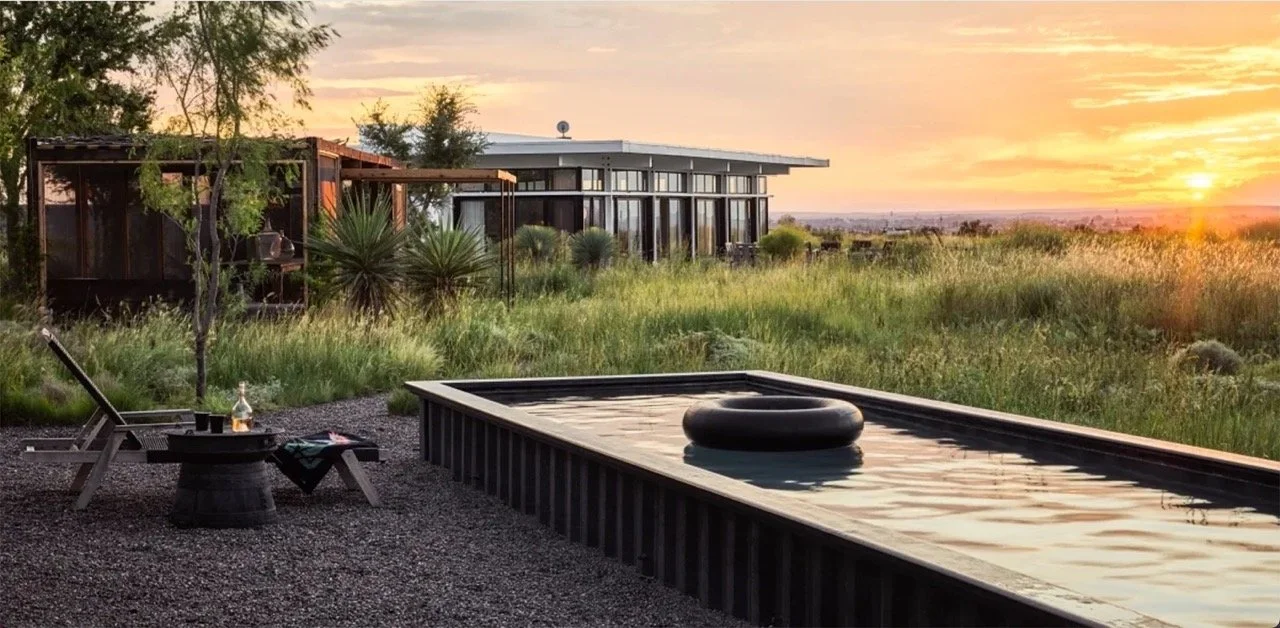
Swimming pools seem like a great idea when a summer heat wave hits, but with the excavation and expense involved in the construction of a traditional in-ground pool, they don’t provide a last-minute solution. That’s why a once-maligned marvel of early-20th-century design—the aboveground pool—is finally enjoying its moment.
Read More
Can Cat-Friendly Design Be Chic?
Hamlet VIII, the lobby cat of the Algonquin Hotel in New York City, is arguably the longest-standing resident of the legendary auberge. So when a recent renovation of the property came to pass, Stonehill Taylor applied concepts of cat-friendly design to ensure that he and the inn’s more temporary guests could live in harmony.
Read More