
Vintage Sterling Silver Is Trending—Here’s Your Guide to Buying and Collecting It
From identifying hallmarks to caring for your pieces, this is everything you need to know about argent objects
As published in Architectural Digest, March 23, 2026
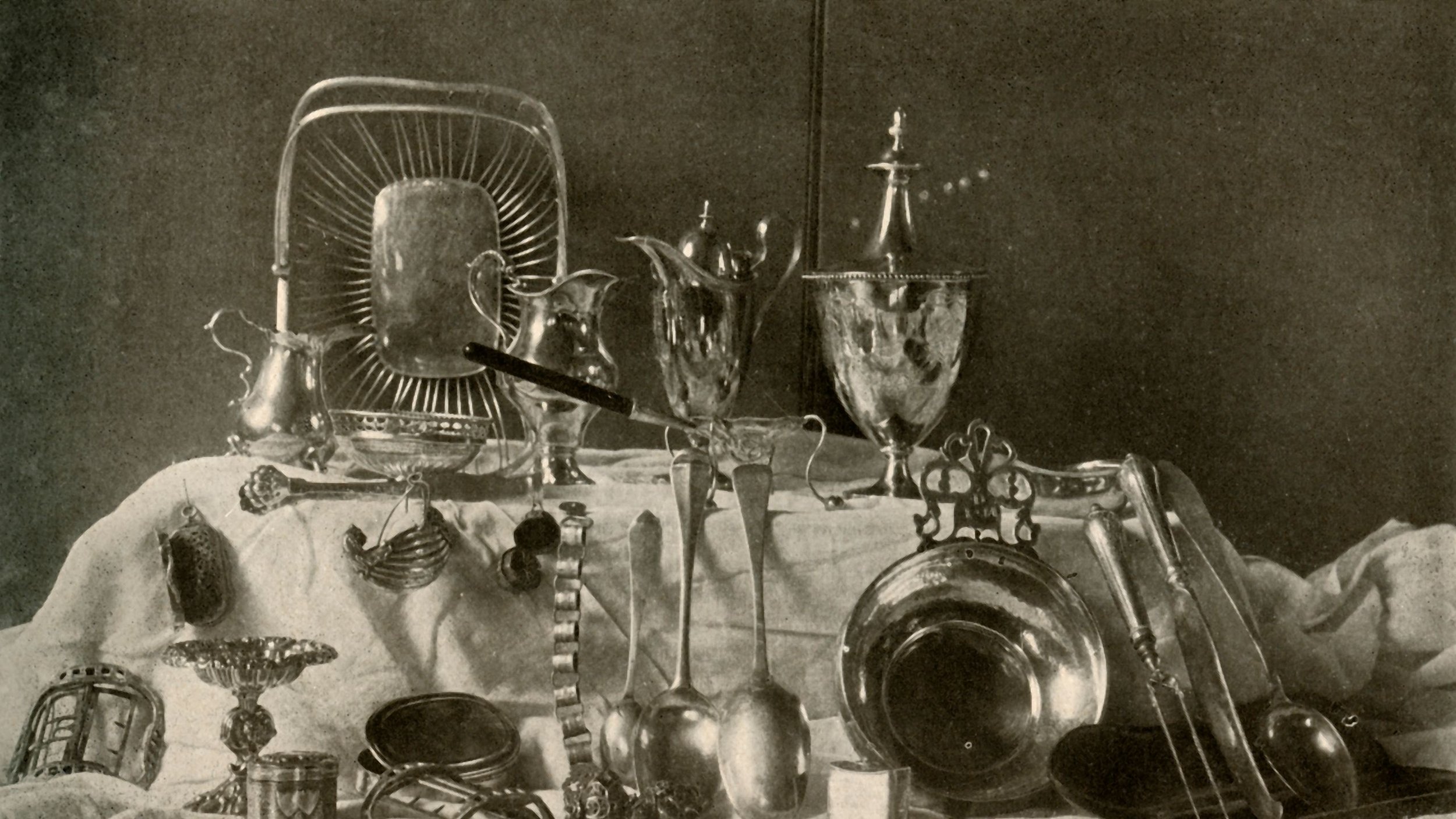
Add a bit of sparkle to your everyday decor.Photo: Print Collector/Getty Images
“The first sterling silver objects I fell in love with were modernist cocktail shakers,” muses John Stuart Gordon, the Benjamin Attmore Hewitt Curator of American Decorative Arts at Yale University Art Gallery. “They were a whole microcosm in one object type, referencing Jazz Age aesthetics, skyscraper architecture, new materials, the politics of Prohibition, and early-20th-century gender roles.”
For many like Gordon, it’s the stories and history that silver contains that makes it such an alluring material to collect. And as Vogue reported at the end of 2025, silver is finding its way into the hearts of a new generation. Eager to join them? Here’s what you need to know about sourcing, buying, and using silver.
The basics
When we talk about collecting silver, typically we mean objects for the table: candlesticks, trays and bowls, flatware, serving pieces, and the like all made from—you guessed it!—sterling silver. “For most of history silver was literally money, which meant that it was carefully regulated and recorded,” says Ben Miller, the founder of Curious Objects, an antique gallery. This means most vintage silver will have clues that tell you a little more about it—including its authenticity—before you buy. Here’s what you should look for:
Hallmarks
Nearly all authentic silver is stamped with hallmarks, which indicate the purity of the metal. They originated in 12th-century England as one of the world’s first forms of consumer protection, though they vary by country, as they’re controlled through each’s national assayer’s office. In the United Kingdom, silver is stamped with a “lion passant,” which depicts a lion walking with its right forepaw raised, and designates that the object is made from 92.5% silver and 7.5% another metal (often copper). In France, objects feature numerical stamps: 1 (95% silver), 2 (80% silver), or 3 (75% silver). In the United States, you might find the stamp “925” or simply the word “sterling,” designating the 92.5% purity. When in doubt, look up the meaning of whatever is stamped onto the item.
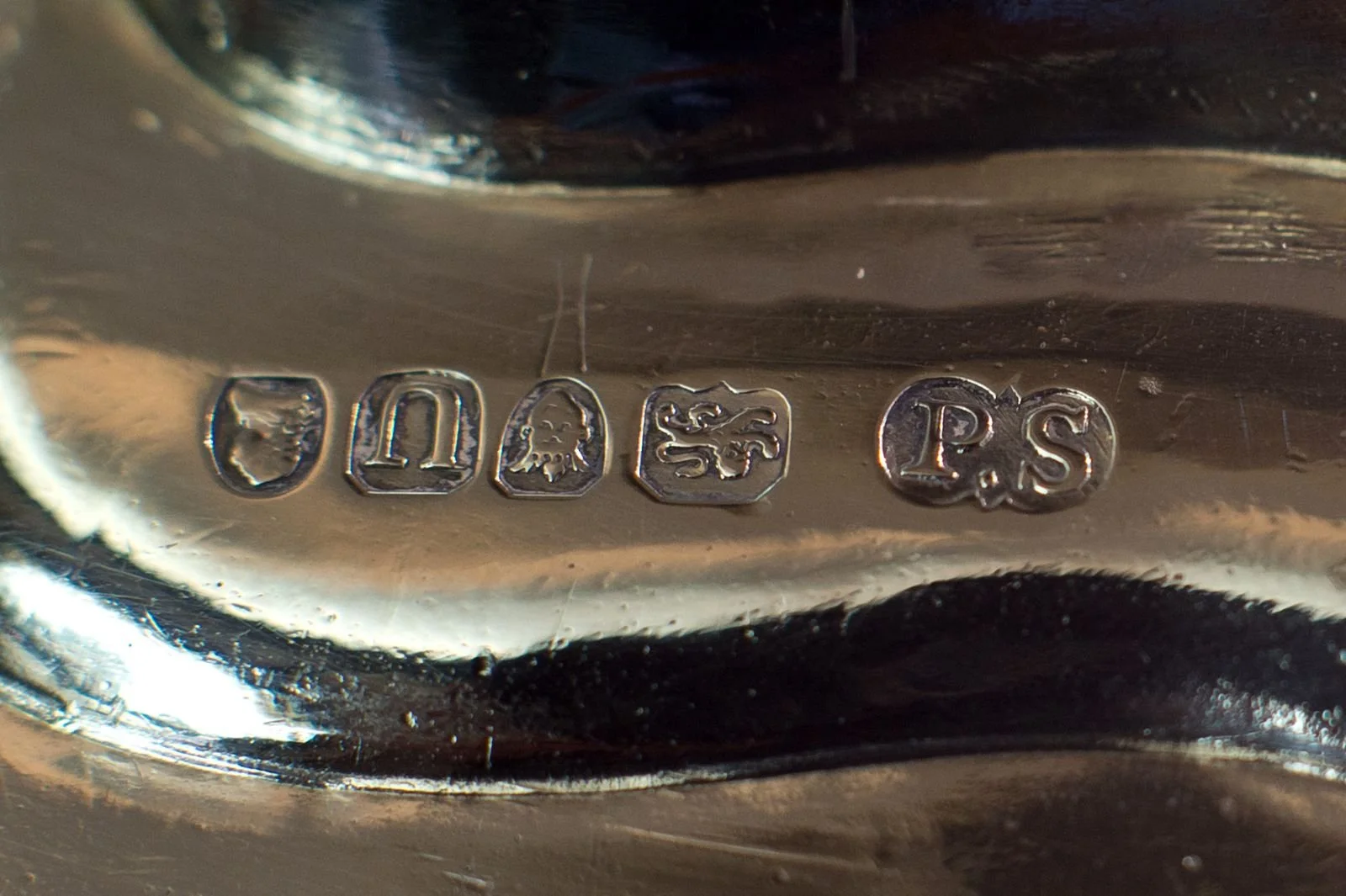
The lion passant, upside down, shows that this piece is made from sterling silver and originated in the United Kingdom. The maker’s mark, P.S., is for Paul Storr. Photo: Ben Pruchnie/Getty Images
Maker’s marks
Maker’s marks differ from hallmarks in that they tell you which maker or firm produced a piece rather than indicating the purity of the metal. Maker’s marks are often a maker’s initials or the name of a firm along with a short series of numbers that provide additional detail; between 1848 and 1965, for example, there were ten variations on the Tiffany & Co. maker’s mark in use, each of which indicates who was in charge when a piece was made. Maker’s marks are not always present, but when they are, they are typically near the hallmarks. There are many online encyclopedias of historical maker’s marks that you can use to identify a stamp you’re looking at.
Silver vs. silver plate
Objects that are made from silver are constructed with the specific makeup of pure silver, usually 92.5%. Silver plate items, on the other hand, are made from a separate base material, then coated in a thin layer of silver for a more cost-effective item that retains the look of its inspiration.
If you’re just getting started collecting silver, learning about a specific category of silver object that intrigues you can help you get your bearings.
Candlesticks
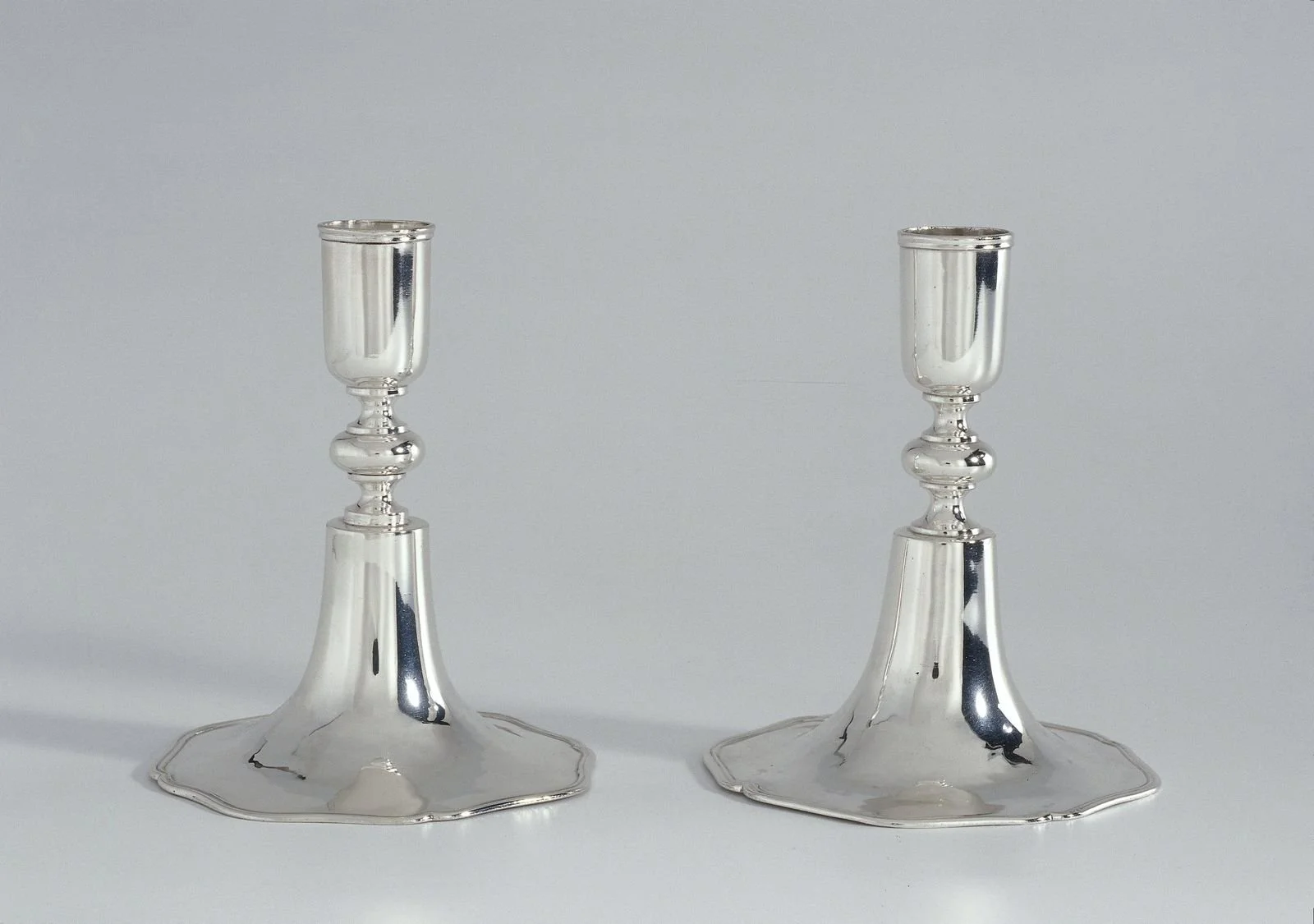
Many silver candlesticks are made from a non-precious material and coated in silver. Sepia Times/Getty Images
Originally a staple of courtly dining in Europe, candlesticks and candelabra tended to follow the decorative movements of the moment. These design styles vary from stately baroque to playful rococo, architecturally inspired neoclassical candlesticks that evoke ancient columns, and Victorian designs that could be surprisingly futuristic (think Christopher Dresser) or Gothic Revival. When browsing, look for candlesticks with a certain heft. Silver candlesticks are not typically solid silver—those that are will likely be on view at a place like Versailles. Rather, the base is usually reinforced with a non-precious metal, like resin or cement, and coated in sterling silver. When buying second-hand, dealers will often refer to these as “weighted” candlesticks. Focusing on a particular design style whose aesthetics really speak to you, like Neoclassical or Arts and Crafts, will help you start to identify fine craftsmanship and learn the big names in the field.
Tea and coffee pots
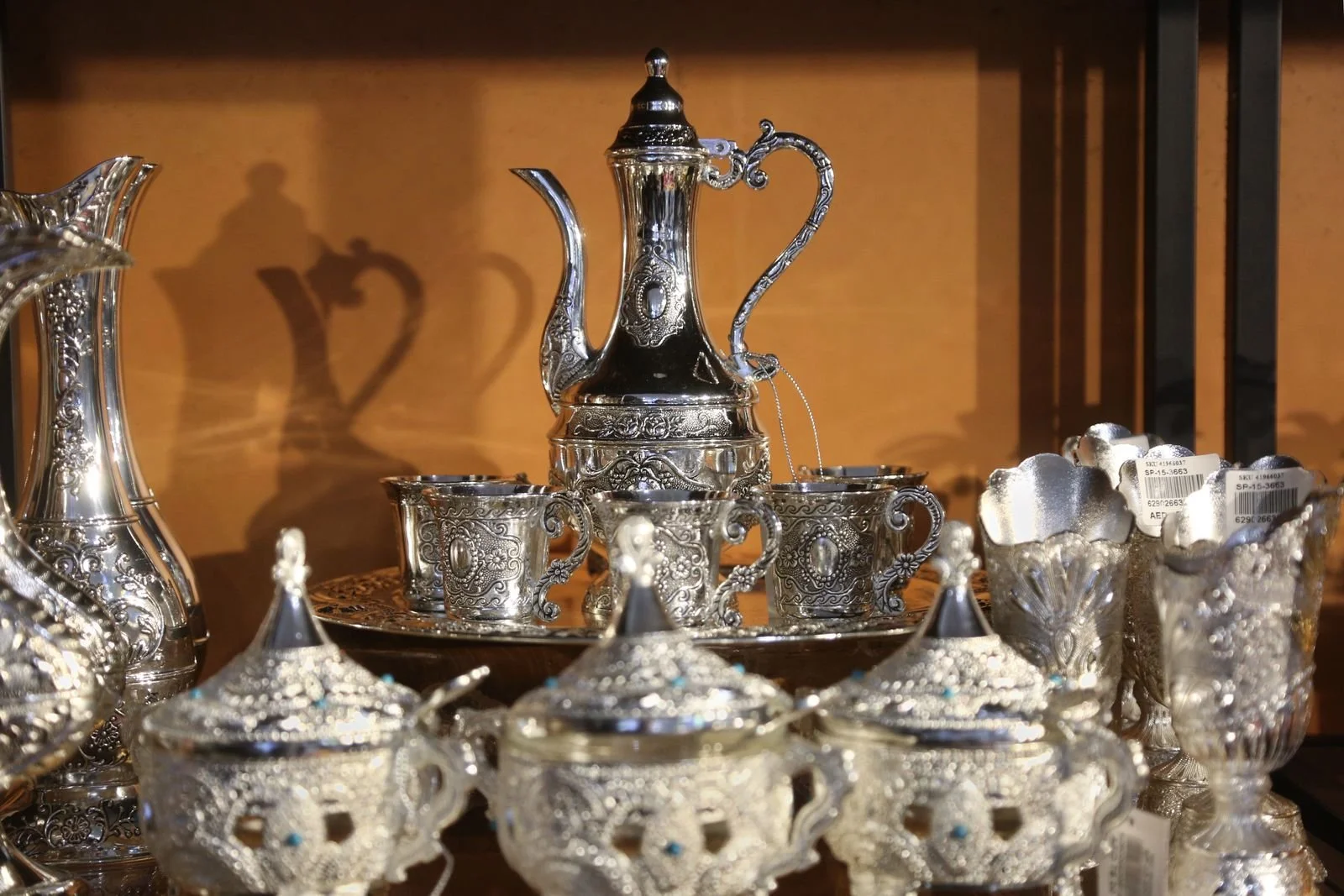
Silver teapots aren’t always the most functional, though they are beautiful decorative objects. Photo: NurPhoto/Getty Images
Tea, coffee, and drinking chocolate were increasingly fashionable in the American colonies, and serving them in an elegant silver pot was the height of refinement. To some extent this was about showmanship; though a silver teapot from the 18th century may seem demure today, in the colonial context it was a rather frank display of wealth. Coffee, tea, and chocolate pots from America and Great Britain were often grand, and the finest examples are usually found in museums today. Those by famous makers like Myer Myers (1723–1795) in New York or Paul de Lamerie (1688–1751) in London are bound to be staggeringly expensive. The price, plus the fact that metal conducts heat rather than insulates, is a reason that these may be more a collector’s item than an everyday, utilitarian purchase.
But this is an area where Art Deco silver, particularly silver plate, shines: exquisite Machine Age vessels by French makers such as Argental, Ravinet d’Enfert, or Roux-Marquiand are likely to be available at a more accessible price point. Even if you use them primarily as decor, they’ll bring a touch of Cubist glamour to your table.
Trays and objects
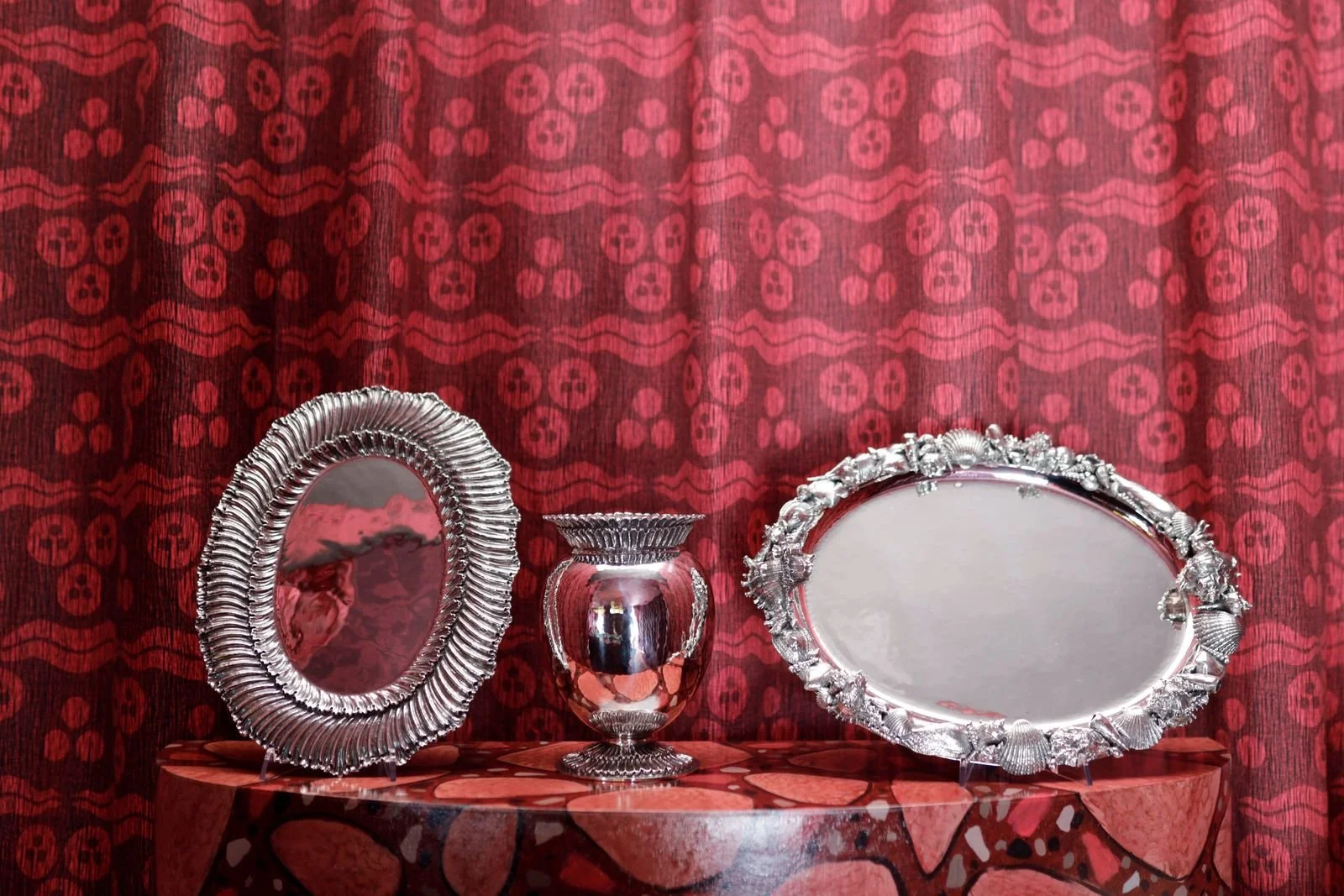
Trays were a primary canvas for expert silversmiths. Photo: Claudio Lavenia/Getty Images
Silver trays were originally known as salvers and can be traced back to Early Modern Europe. Though practical and elegant at the table, trays later became canvases for expert silversmiths in the late 19th century. In the 1880s, Tiffany & Co. became well-known for its Japonesque designs, which were part of a broader fascination with Japanese decorative arts. In this silver tray from the collection of the Metropolitan Museum of Art by Edward C. Moore for Tiffany & Co., different colored metal alloys are used like paints to create the scene of a golden frog relaxing on silver water under a copper sun.
Bowls and other vessels from the Arts and Crafts movement, often recognizable by their distinctive hammered surface, can be a good place for newer collectors to start exploring. Kevin W. Tucker, chief curator at the High Museum of Art, recommends looking at “smaller studios producing silver works in the Arts and Crafts mode.”
Flatware
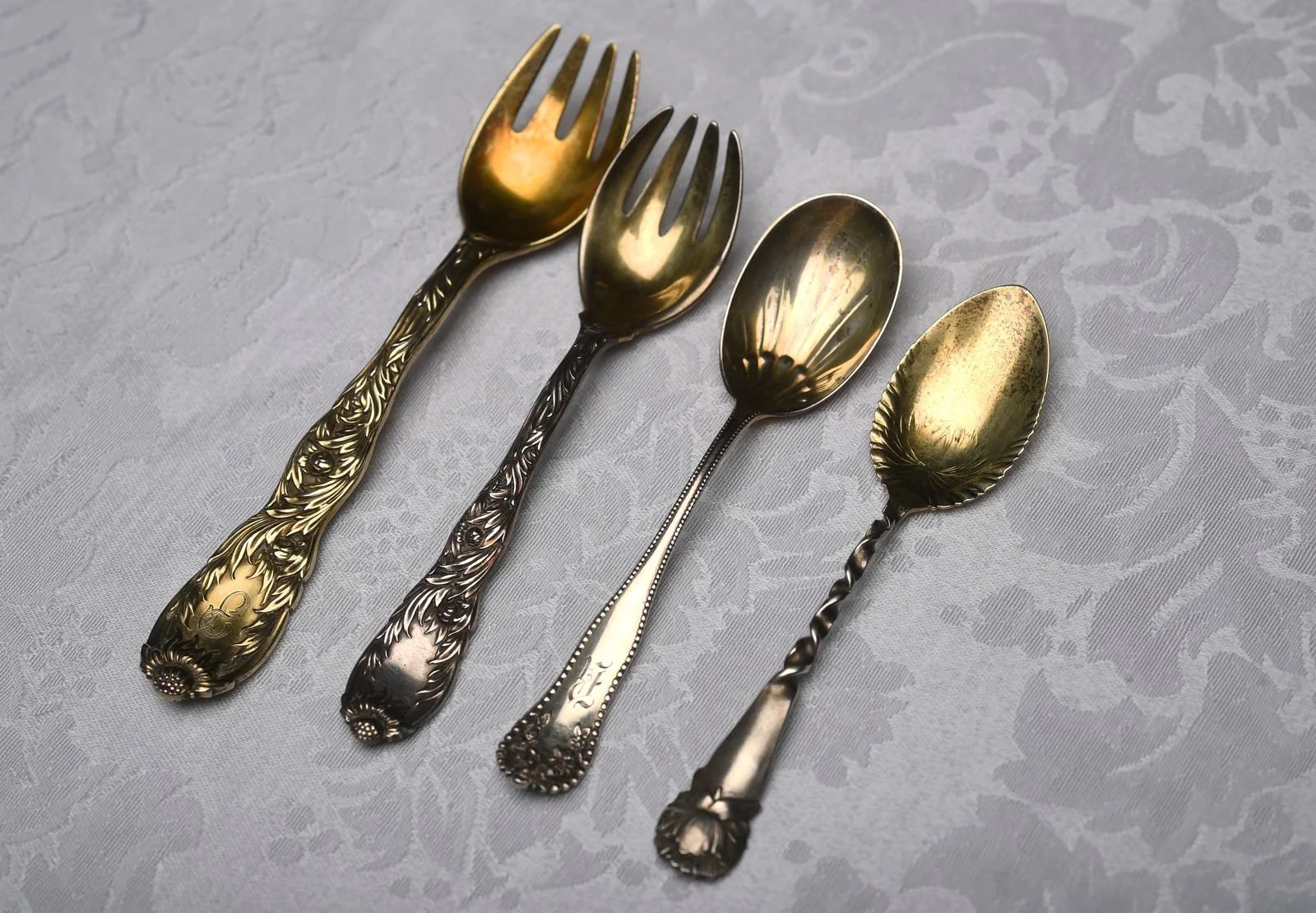
Silver flatware tells culinary history. Photo: MediaNews Group/Reading Eagle/Getty Images
Part of the fun of collecting silver is directly connected to its role in entertaining: its spectacular forms tell the story of food in the 19th century. “Salad forks made before 1880 are rare because salad was rare, as was ice and ice cream,” says Christopher Molinar, a collector who bought his first antique silver spoon at age 13. “The railroads changed how food was moved and made special things very ‘everyday.’ Speed and refrigeration allowed different foods to gain in popularity.” Dallas-based dealer Hampton Deville points out that a new era of artistic experimentation took place in part as a result of westward expansion. “American silver design really took off once we began mining raw ore out West, and this allowed firms including Tiffany, Gorham, and Whiting to experiment with bold designs and techniques.” New foods and more silver to work with meant more elaborate and exotic silver objects hitting the market. For Sarah Stafford Turner, a senior editor at Antiques magazine, the more unusual an item, the better. “Obscure silverware, like olive prongs and berry forks have always piqued my interest. For my husband’s birthday one year I got him a fabulous openwork berry fork.” They use it to serve charcuterie along with some sterling silver butter knives deployed as cheese knives.
How much should you pay for silver?
When it comes to antiques, silver is an interesting anomaly in that there is both an intrinsic, mathematical value and an artistic, historical one. Silver is a precious metal, like gold or platinum, meaning there is a spot price—determined by things like supply and demand and real-time trading—which can be viewed as a (very!) baseline indicator of worth. “For much of history, silver was our monetary standard,” says Gordon, the Yale University Art Gallery curator. “Coins could be melted down to form a teapot and that teapot could be melted down to become coins.” Though modern banking now exists, silver still carries intrinsic monetary value, and is currently priced around $2.80 per gram. When buying an item, you can always weigh it to understand the cost of the pure metal. (Just make sure you’re not weighing something plated.)
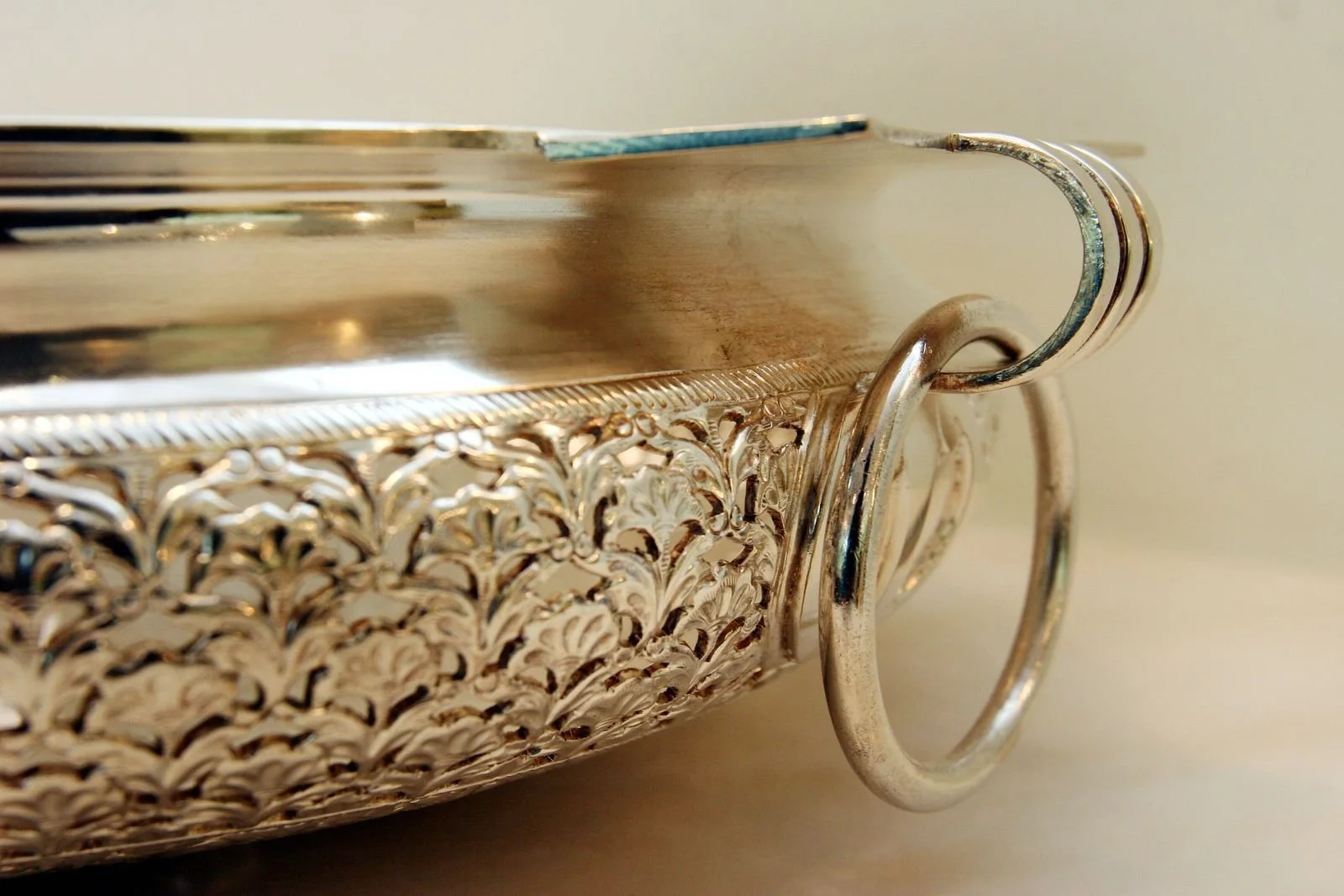
The price of silver depends on many factors, and understanding them will help you know whether you’re getting a good deal. Photo: The India Today Group/Getty Images
However, you should generally never expect to pay this price for a silver antique, because there is a lot more than just the base material that determines the price—there’s craftsmanship, rarity, maker, style, condition, and more. Pieces by luxury brands, like Tiffany or Georg Jensen, will typically carry a higher price than something made by a lesser known maker. Provenance is also important: If an object came from the estate of a known collector or celebrated individual, that can increase its value—essentially the fact that a discerning person or family owned something in the past is understood as evidence in support of its quality. “I think, by far, the best way to get acquainted with silver is to visit a specialist shop, let them know what you’re looking for, and ask them to guide you,” says Stafford Turner. “If you develop a relationship with a seller, they can be your guide in learning everything you need to know, while also directing you towards objects they think you would like and would fit your lifestyle.”
Caring for silver objects
If you start to see sooty surface discoloration on your silver, have no fear, it’s a normal reaction between the metal and sulfur, which is present in the air. You can slow this down by storing silver in a cool, dry, dark place or in an anti-tarnish bag. Luckily, if you do notice tarnish, it’s reversible with a little polishing (and we have a whole guide on cleaning silver). Just know that when you remove the tarnish, you’re essentially exfoliating a microscopic layer of the metal, revealing the bright surface just underneath. So don’t over-polish surface details. All of that said, a little tarnish is also a sign of life for a silver object. Stafford Turner has a silver framed photograph of her with some friends in London, and she doesn’t polish it. “As the years go by, the tarnish reminds me that the photo is getting older. In short: Use your silver! If I could leave the world with one message, it would be this.”